From the rhythmic scratching of graphite on vellum to the first pixelated lines of early CAD, the architectural world has always been defined by its tools. Today, we stand at the precipice of a third revolution: the transition from manual CAD drafting to automated macro engines and generative design workflow.

1. AI and the End of Repetitive Dimensioning
Perhaps the most time-consuming aspect of any set of construction documents is the constant need for precise dimensioning. Recent breakthroughs in machine learning are now allowing software to recognize spatial relationships within a floor plan. Instead of manually clicking between walls, AI-driven engines can now automatically generate entire dimension strings based on local building codes and custom office standards.
"The future architect is not a person who draws lines, but a person who manages the algorithms that draw the lines."
2. The Power of Algorithmic Scheduling
Managing window, door, and material schedules has traditionally been an administrative headache fraught with the risk of human error. Automation is turning this reactive process into a proactive one. By utilizing algorithmic scheduling, changes made in a 3D model are instantly reflected in the project management suite, ensuring that the quantities and specifications are never out of sync with the visual intent.
3. Spotlight: DraftingMate by Keystone Labs
At Keystone Labs, we didn't want to just watch the future happen; we wanted to build the engine driving it. Our latest application, DraftingMate, implements advanced geometric algorithms to handle the 'rote linework' that drains creative energy. It identifies common architectural symbols and automates the tedious cleanup process, allowing you to get back to the art of design.
See DraftingMate in Action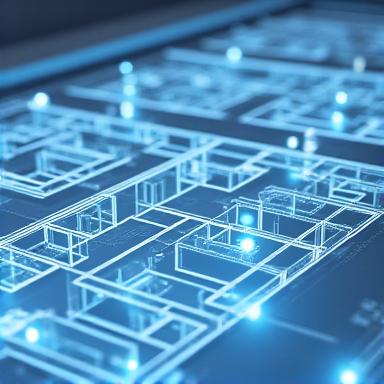
Conclusion: Focus on Creativity, Not Rote Linework
The shift toward automation is not about replacing the architect; it is about liberating them. By embracing these innovative tools, professionals can shift their focus from the repetitive mechanics of drafting back to the high-level spatial thinking and creative problem-solving that defines the profession. The future of drafting is not just faster—it is smarter.
Written by the Keystone Engineering Team
UK, KY2-2400